
Choosing the right backtesting platform is crucial for traders aiming to test strategies effectively. Key features to consider include data quality, customization options, execution realism, performance analytics, and pricing. Here’s a quick summary of six popular platforms:
- MillionMachine: No-code strategy design, supports multiple asset classes, includes Monte Carlo tests. Currently in beta with pricing not disclosed.
- QuantConnect: Offers 20+ years of data, supports Python/C#, and avoids look-ahead bias. Requires coding skills and can get expensive.
- MetaTrader 4/5: Free platform with broker integration, great for forex and CFDs. Backtesting accuracy depends on broker data quality.
- Amibroker: High-speed backtesting with portfolio-level testing. Requires coding knowledge and a separate data subscription.
- NinjaTrader: Best for futures and forex, highly customizable but has a steep learning curve.
- TradingView: User-friendly, web-based, and uses Pine Script. Limited advanced features like walk-forward testing.
Quick Comparison:
| Platform | Market Coverage | Coding Required | Pricing Model | Key Strengths | Key Weaknesses |
|---|---|---|---|---|---|
| MillionMachine | Stocks, futures, crypto | No | Beta (TBD) | No-code, Monte Carlo tests | Beta access, pricing unknown |
| QuantConnect | Multi-asset | Yes | Subscription | Institutional-grade data | Advanced features are costly |
| MetaTrader | Forex, CFDs | Yes (MQL) | Free | Broker integration | Data quality varies by broker |
| Amibroker | Multi-asset | Yes (AFL) | One-time | Portfolio-level testing | Requires separate data feed |
| NinjaTrader | Futures, forex | Yes (C#) | Free/charting | Customization for pros | Complex for beginners |
| TradingView | Multi-asset | Yes (Pine Script) | Subscription | Easy to use, active community | Limited advanced features |
Each platform has strengths tailored to specific trading needs. For non-coders, MillionMachine and TradingView are easier options. Coders may prefer QuantConnect or Amibroker for their flexibility. MetaTrader suits forex traders, while NinjaTrader is ideal for futures. Choose based on your skill level, market focus, and budget.

Backtesting Platform Comparison: Features, Pricing, and Best Use Cases
1. MillionMachine
Market Coverage
MillionMachine provides access to five key asset classes: stocks, futures, currencies, ETFs, and cryptocurrencies. This broad reach means you can experiment with strategies across various instruments without switching platforms. Whether you’re diving into equity momentum systems or exploring futures trend-following techniques, the platform creates a unified space to develop and test your ideas.
Strategy Customization
The platform features a visual strategy designer, making it easier to bring your trading ideas to life. You can describe your concept using voice or text, then fine-tune your rules directly on interactive price charts. This approach eliminates the need for coding while still giving you control over essential elements like entry and exit rules, position sizing, and more. Plus, its parameter optimization tool allows you to test different settings to adapt your strategy to shifting market conditions.
Execution Realism
MillionMachine focuses on delivering accurate backtesting to evaluate potential profitability. By testing strategies against historical data and integrating real-time data feeds, it ensures a realistic approach to strategy refinement. Real-time alerts further enhance decision-making speed. However, details like slippage, latency, and order type specifics remain unclear. Even so, the platform’s commitment to rigorous historical testing helps you polish your strategies before going live.
Performance Analytics
To ensure your strategies are more than just lucky guesses, MillionMachine includes overfitting tests using Monte Carlo simulations. These tests assess whether a strategy’s past performance is statistically sound. The platform also generates detailed performance reports, helping you identify how your strategy behaves across different market cycles and pinpointing areas that may need improvement before you risk actual capital.
Pricing
MillionMachine is currently in its beta phase, offering full functionality, including backtesting, performance analysis, and optimization tools. While pricing for the general release hasn’t been disclosed, early access is available for a limited time. This beta period gives you a chance to explore the platform’s features and capabilities before deciding on a subscription.
2. QuantConnect

Market Coverage
QuantConnect takes a unique approach to market coverage, offering access to equities, forex, crypto, futures, options, and derivatives. It boasts over 20 years of market data, integrates alternative data sources, and includes corporate actions. The platform also supports over 50 broker-specific integrations, making it versatile for a wide range of trading needs.
Strategy Customization
QuantConnect is built on the open-source LEAN engine, which allows for extensive customization. Users can create strategies using Python or C# through a unified API that combines research, backtesting, and live trading into one streamlined process. The platform also features parameter optimization tools and AI capabilities to refine strategy development. David Ye, a professor at Duke University, highlighted its benefits for technically inclined users:
"In order to be able to design a viable algorithm, a robust backtesting engine is crucial. After exploring various options, we found QuantConnect to be the most suitable for our needs. Its ease of use, wide range of instruments and asset classes, and an extensive Python library makes it an ideal choice for student."
These features make it a strong choice for those seeking a highly customizable trading experience.
Execution Realism
QuantConnect uses an event-driven architecture to process signals, orders, and updates with each tick. This ensures high-resolution data processing, providing rapid execution and reducing slippage. By employing "Point-in-Time Data", the platform aligns historical information to specific moments, helping users avoid look-ahead bias. This focus on execution realism enhances the accuracy and reliability of backtesting results.
Performance Analytics
The platform delivers institutional-grade analytics, offering detailed performance metrics and realistic margin modeling to simulate live trading conditions. Chris O’Donnel of OAMQuant shared his perspective:
"As a quantitative algorithmic hedge fund, we were seeking a platform that would enhance our ability to develop and backtest our trading strategies. After evaluating a range of solutions, we wholeheartedly endorse QuantConnect as the ideal platform for our needs."
With these tools, traders gain deeper insights into their strategies’ performance under real-world conditions.
Pricing
QuantConnect uses a subscription-based pricing model, with tiers tailored to different backtesting and data access needs. A free tier is available for basic use, while professional plans provide expanded data access, faster backtesting, and additional computational resources. Costs vary depending on the features and data packages selected, allowing users to choose a plan that fits their requirements and budget.
3. MetaTrader
Market Coverage
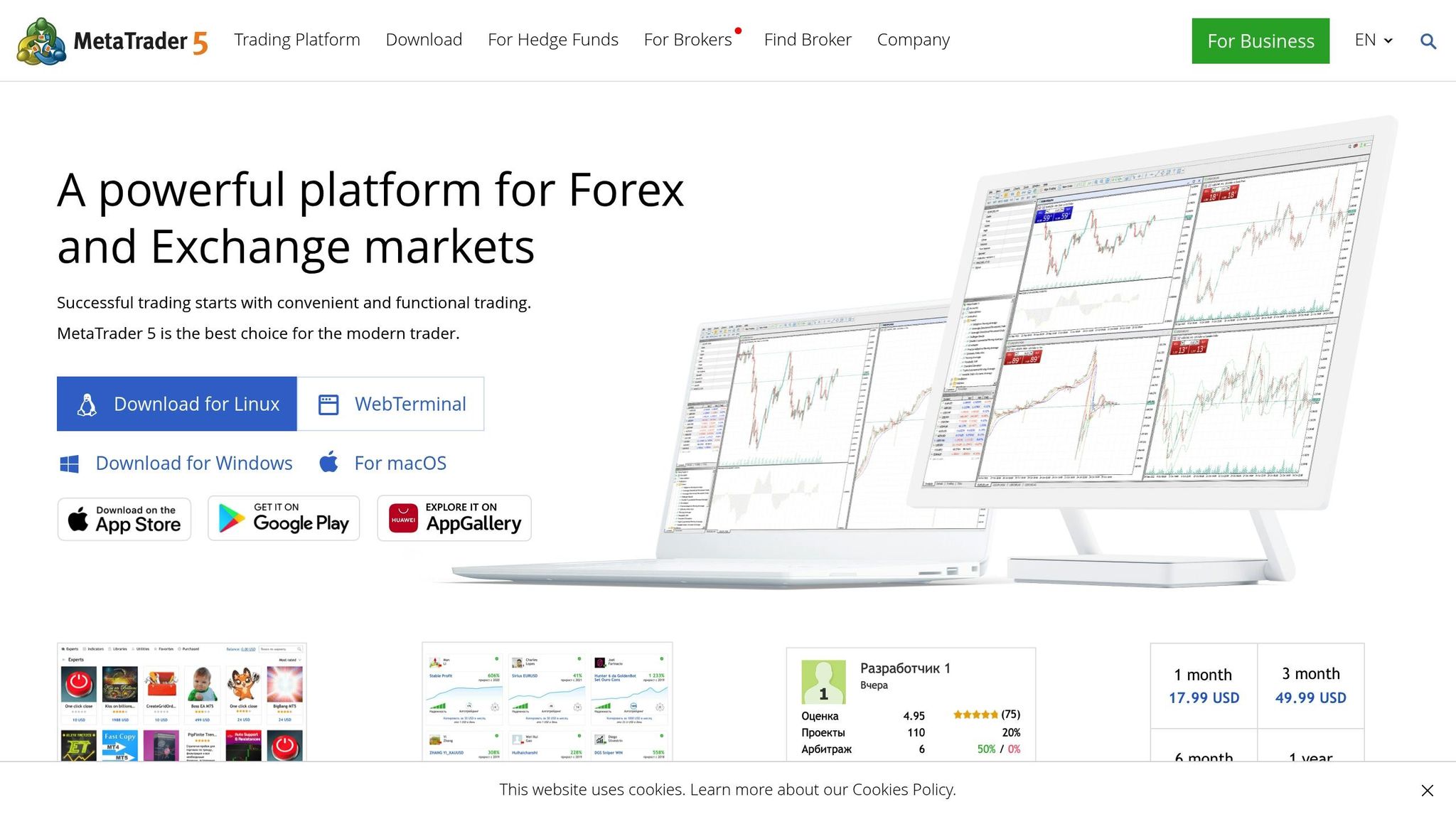
MetaTrader 4 (MT4) and MetaTrader 5 (MT5) have become go-to platforms for forex and CFD trading. MT4 primarily targets forex and CFDs, while MT5 takes it a step further by including stocks and futures in its offerings. MT5 also supports multi-currency testing, allowing traders to test multiple instruments simultaneously. Additionally, MT5 connects with several stock exchanges, offering broader trading opportunities. However, the reliability of backtesting results heavily depends on the availability and quality of historical data. This broader market reach provides traders with the tools needed to develop strategies tailored to their specific needs.
Strategy Customization
MetaTrader is well-known for its ability to support highly customized trading strategies. Using its proprietary MQL programming language, traders can create complex automated strategies and fine-tune them with genetic algorithms. The platform also allows the development of Expert Advisors (EAs), which can execute intricate trading strategies based on technical indicators. While MQL is a powerful tool, it can be challenging for beginners unfamiliar with coding concepts. Thankfully, the platform has a vast community of users and resources, including tutorials and a marketplace filled with pre-built EAs, making it easier for traders to get started.
Execution Realism
MetaTrader doesn’t just focus on customization; it also prioritizes realistic trading conditions. Its built-in Strategy Tester offers multiple execution modes, including the "Every Tick" mode, which ensures high data accuracy. As Andrew Rul Trading notes:
"When backtesting futures, accuracy is everything. A good platform should simulate real market conditions, including commissions, slippage, and margin requirements."
To achieve the most accurate results, traders should download complete historical data and account for spread variations. While MetaTrader provides robust execution modeling, the precision of its results still depends on the quality of the historical data used.
Performance Analytics
MetaTrader’s Strategy Tester delivers detailed performance metrics, such as profit factors, drawdowns, and trade statistics. These analytics integrate seamlessly with custom EAs, allowing traders to analyze results immediately after conducting backtests. Its combination of flexibility and reliability has kept MetaTrader a preferred choice for traders worldwide.
Pricing
MetaTrader offers a budget-friendly option for traders with varying financial needs. The MetaTrader 5 platform itself is free to use, though additional costs may arise for purchasing Expert Advisors or accessing specific data. Pricing can also vary depending on the broker, as some may impose annual fees. This flexibility makes MetaTrader accessible to a wide range of users.
4. Amibroker
Market Coverage
Amibroker supports a wide range of markets, including stocks, futures, options, and more. Unlike platforms that tie you to specific data providers, Amibroker gives you the freedom to choose your own data source through a separate data subscription. While this adds to the overall cost, it also provides flexibility, making it easier for traders to tailor their setups. This broad market access lays a solid foundation for creating highly personalized trading strategies.
Strategy Customization
At the heart of Amibroker is its proprietary AFL (Amibroker Formula Language), which allows traders to design precise and intricate trading algorithms. While it does require coding knowledge, making it less beginner-friendly than drag-and-drop platforms, AFL offers unmatched flexibility for building complex strategies. With a wealth of built-in functions and indicators, traders can refine their approaches without starting from scratch. One standout feature is Amibroker’s portfolio-level backtesting, which evaluates entire portfolios instead of just individual trades – a feature that many platforms lack.
Execution Realism
Amibroker boasts a high-speed backtesting engine that enables traders to test multiple strategies quickly, a critical advantage when fine-tuning algorithms. A 2025 review highlighted its exceptional speed, even with large datasets, making it ideal for rapid iterations. The platform also includes advanced tools like Monte Carlo analysis and walk-forward testing, which allow traders to assess how their strategies might perform in various market conditions. These features provide a more realistic view of potential outcomes, helping traders build confidence in their strategies.
Performance Analytics
The platform shines in its performance analytics, offering advanced scanning tools and detailed metrics to evaluate trading strategies. Its position sizing capabilities are particularly noteworthy, letting traders simulate different allocation methods to understand their impact on returns and risk. This is especially useful for minimizing drawdowns and optimizing portfolio performance. While the interface may feel outdated compared to newer platforms, the depth and reliability of its analytics remain a strong point.
Pricing
Amibroker uses a one-time purchase model with pricing tiers ranging from single-user to professional licenses. For long-term traders, this can be more economical than subscription-based platforms. However, keep in mind that you’ll need to budget for a separate data subscription, which adds to the overall cost. Despite this, Amibroker’s speed, customization options, and portfolio-level backtesting make it a compelling choice for serious traders looking for a powerful and flexible toolset.
sbb-itb-e64548c
5. NinjaTrader
Market Coverage
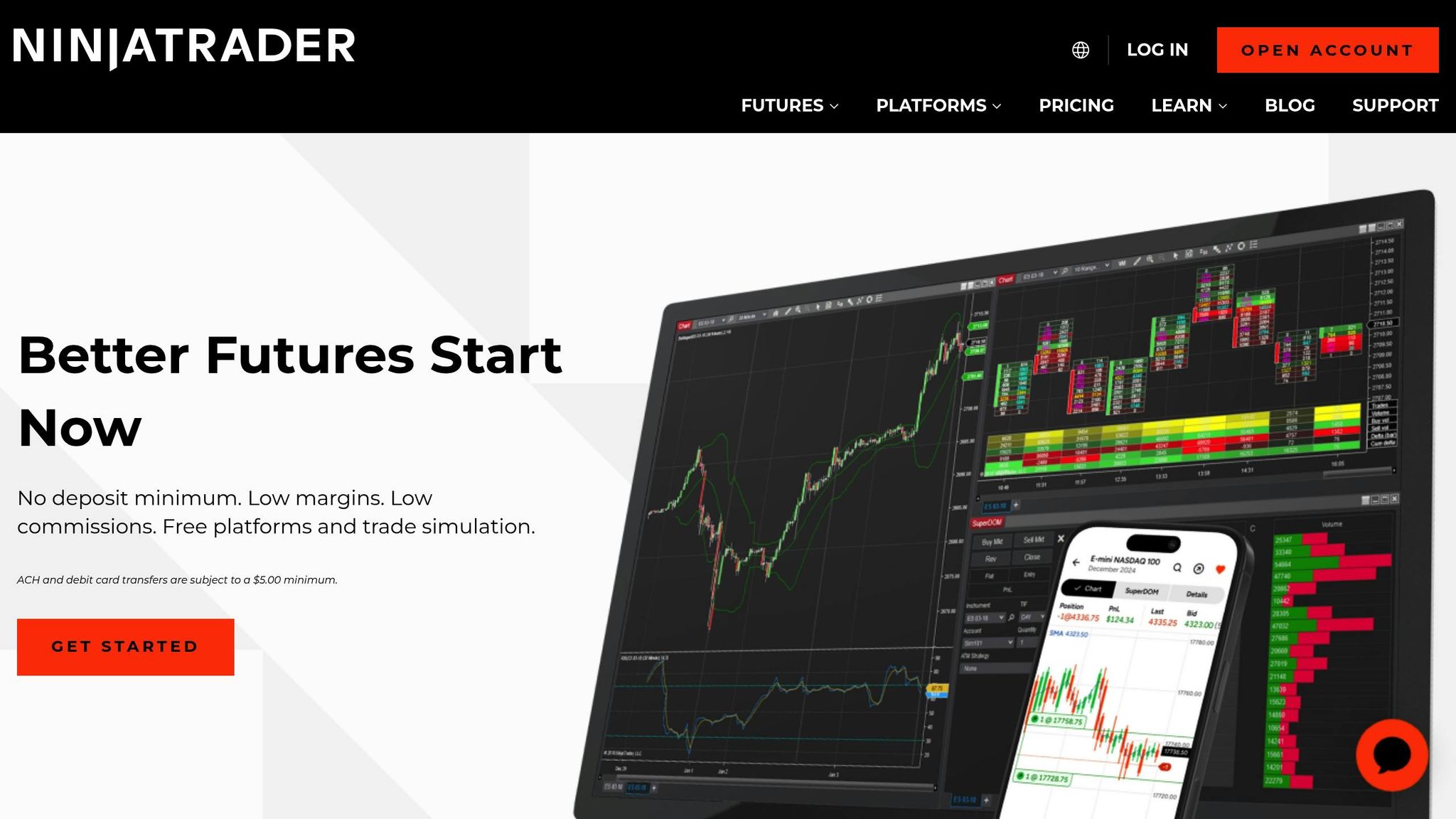
NinjaTrader zeroes in on futures and forex markets, making it a go-to platform for traders focused on these asset classes. While it does provide some support for multiple asset types, its performance in stock backtesting falls short. To access the historical data necessary for comprehensive backtesting, you might need to invest in additional data feeds.
Strategy Customization
NinjaTrader relies on NinjaScript, a custom programming language built on C#, giving traders substantial control over their trading strategies. For those new to coding, the platform offers user-friendly, visual interfaces that minimize the need for extensive programming. Meanwhile, experienced users can dive deep with direct C# coding for precise customization. The platform is free for charting and developing strategies, but live trading requires purchasing a license. These features make it well-suited for simulating realistic trade executions.
Execution Realism
With NinjaTrader, you can perform both manual and automated backtesting, ensuring highly accurate trade simulations. Its local hosting setup is particularly beneficial for high-frequency trading strategies where minimizing latency is a priority. Andrew Rul Trading praised the platform for its powerful capabilities, although it does come with a steep learning curve. While it’s a dream tool for advanced users seeking granular control, beginners might find it a bit overwhelming.
Performance Analytics
The platform offers a rich set of analytics tools tailored for active futures and forex traders. Its standout feature is the ability to customize performance analysis, allowing you to evaluate strategies from various perspectives. However, this same complexity that appeals to seasoned traders can be a hurdle for those just starting out. If you’re technically skilled and have specific analytical goals, NinjaTrader’s depth will likely meet your needs.
6. TradingView
Market Coverage
TradingView stands out by combining broad market coverage with tools for creating strategies and testing them in a realistic environment. It supports a range of markets, including stocks, forex, cryptocurrencies, and futures. For those who need even more data, subscription plans like Pro, Pro+, and Premium offer extended historical data and access to additional markets. However, some users have noted limitations with data sources like Forex, Binance, MT4, and MT5. The platform also includes a mobile app, making it convenient for users to analyze markets on the go. This extensive data access forms a solid base for building and testing trading strategies.
Strategy Customization
TradingView uses Pine Script, its proprietary programming language, to power its strategy development tools. With Pine Script, users can define specific entry and exit points and integrate technical indicators into their strategies. It’s designed to be accessible for beginners while still offering advanced capabilities for experienced coders. The platform also includes a built-in Strategy Tester, which evaluates performance using historical data and provides metrics like profit/loss, win rate, and maximum drawdown. This makes it a versatile tool for traders of all skill levels.
Execution Realism
TradingView enhances strategy development with realistic backtesting features. Standard backtesting is available (with limitations based on subscription level), while advanced backtesting allows users to analyze strategies using complete datasets from specific time periods. The platform’s broker emulator adds another layer of realism by accounting for intrabar price movements and order execution logic. Recent updates have further improved its flexibility. As Hugh Kimura explains:
"TradingView makes it easy to backtest trading strategies. But there are things that you have to be aware of to get accurate results".
Understanding these nuances is key to ensuring backtesting results align closely with real-world market conditions.
Pricing
TradingView offers annual subscription plans ranging from $167.88 to $2,399.40. For those who want to try the platform before committing, a free version provides basic charting and select backtesting features. Upgrading to a paid plan unlocks additional tools and access to more extensive data, catering to both casual and professional traders.
Strengths and Weaknesses
Here’s a quick rundown of the strengths and weaknesses of each platform, based on the detailed analysis above. Every platform has its own set of advantages and limitations, which can influence your choice depending on your trading needs.
MillionMachine stands out for its visual, no-code strategy design, making professional-grade backtesting accessible even without programming skills. It supports five asset classes and includes Monte Carlo simulations to test for overfitting. However, it’s still in beta, with limited access and undisclosed pricing.
QuantConnect offers institutional-grade infrastructure, featuring over 20 years of high-resolution tick data and support for multiple programming languages, such as C#, Python, and F#. It also includes point-in-time data to avoid look-ahead bias and an AI assistant (Mia) to ease the learning curve. That said, it requires coding expertise, and its advanced features can become costly with paid subscriptions.
MetaTrader 4/5 is a popular, free-to-use platform with seamless broker integration. MT5 offers multi-currency testing and faster multi-threaded backtesting. However, its interface feels outdated, and the accuracy of backtesting heavily depends on the quality of historical data provided by brokers.
Amibroker is known for its high-speed backtesting engine, capable of processing large datasets, and its portfolio-level testing with Monte Carlo analysis. Its one-time purchase model is appealing for cost-conscious users. On the downside, it requires learning AFL (Amibroker Formula Language) and often needs a separate data subscription.
NinjaTrader provides excellent customization, particularly for futures and forex markets, but has a steep setup process and demands significant technical knowledge, making it less suitable for beginners.
TradingView combines a user-friendly, web-based interface with Pine Script customization and a strong community of users. However, it lacks advanced features like walk-forward testing and genetic optimization.
Here’s a table summarizing the key strengths and weaknesses of each platform:
| Platform | Strengths | Weaknesses |
|---|---|---|
| MillionMachine | Visual design, no coding needed, multi-asset support, Monte Carlo tests | Beta access only, pricing not disclosed |
| QuantConnect | Institutional-grade data, multi-language support, AI assistant, cloud-based | Steep learning curve, expensive paid tiers |
| MetaTrader 4/5 | Free, widely adopted, broker integration | Dated interface, data quality varies by broker |
| Amibroker | High-speed processing, one-time purchase, portfolio testing | Requires AFL coding, separate data subscription |
| NinjaTrader | Highly customizable, strong for futures/forex | Complex setup, not beginner-friendly |
| TradingView | User-friendly, web-based, large script library, active community | Limited to Pine Script, lacks advanced optimization |
These trade-offs are essential to consider when selecting a platform that aligns with your trading goals.
Important Disclaimer
MillionMachine.com is a research, education, and strategy development tool. It does not offer personalized investment, trading, or financial advice, nor does it solicit the purchase or sale of financial instruments. MillionMachine does not provide recommendations or guidance on the suitability of any strategy, trade, or investment.
Users are fully responsible for evaluating their own trading decisions and risks. All simulations, backtests, and performance metrics generated by MillionMachine are hypothetical and not guarantees of future performance. Hypothetical results have inherent limitations and may differ significantly from actual trading outcomes.
MillionMachine is not registered as a Commodity Trading Advisor (CTA), Investment Advisor, or Broker-Dealer with the NFA, CFTC, SEC, or any other regulatory body. While the founder was previously registered as a CTA with the NFA, that registration is no longer active, and MillionMachine does not engage in regulated advisory activities.
The platform does not execute trades, manage customer funds, or provide access to live trading accounts. Broker API integrations are solely for user-initiated automation, and users are responsible for ensuring compliance with all applicable laws, regulations, and broker requirements.
All market data, charts, signals, and analytics provided by MillionMachine are for informational and educational purposes only. MillionMachine does not verify the accuracy or completeness of market data and assumes no responsibility for errors, delays, or omissions.
Trading financial instruments – including futures, stocks, cryptocurrencies, and derivatives – carries significant risks and may not be suitable for everyone. There is a possibility of losing more than your initial investment. Past performance, whether actual or simulated, is not indicative of future results.
Conclusion
Choosing the right backtesting platform hinges on your coding expertise, budget, and trading focus. For those comfortable with coding, platforms like QuantConnect provide extensive customization options. On the other hand, if coding isn’t your forte, visual, no-code platforms like MillionMachine offer professional-grade backtesting tools that don’t require programming skills. These considerations are key to finding a platform that aligns with your trading approach.
If you’re budget-conscious, free options like MetaTrader for forex and CFDs could be a good starting point. TradingView’s free version is another option, with the ability to upgrade for $167.88 per year. Amibroker offers a one-time purchase model, though you’ll need to account for additional data subscription costs.
Your market focus also plays a major role. Forex traders might lean toward MetaTrader for its broker integration, while futures traders may prefer NinjaTrader for its flexibility. For strategies covering multiple assets like stocks, futures, and crypto, platforms with broader market coverage are essential. Pay close attention to data quality and execution modeling – platforms that factor in real trading conditions, such as slippage, variable spreads, and commissions, are crucial to avoid misleading backtest results.
Each platform strikes a balance between ease of use and advanced capabilities. Code-heavy platforms deliver powerful tools but require technical expertise, while user-friendly interfaces offer quick access for beginners. The best choice will depend on your current skill set and long-term trading goals.
MillionMachine.com is designed for research, education, and strategy development purposes only. Nothing on the website or within the MillionMachine platform constitutes personalized investment, trading, or financial advice, nor does it serve as a solicitation to buy or sell any financial instrument. MillionMachine does not provide recommendations or assess the suitability of any strategy, trade, or investment.
Users are fully responsible for evaluating their own trading decisions and risks. All simulations, backtests, performance metrics, and analytics generated by MillionMachine are hypothetical and not guarantees of future results. Hypothetical performance comes with inherent limitations and does not reflect actual trading. Real-world results may vary significantly.
MillionMachine is not registered as a Commodity Trading Advisor (CTA), Investment Advisor, or Broker-Dealer with the NFA, CFTC, SEC, or any other regulatory body. While the founder was previously registered as a CTA with the National Futures Association (NFA), that registration is no longer active, and MillionMachine does not engage in regulated advisory services.
MillionMachine does not facilitate trades, manage customer funds, or provide access to real-time trading accounts. Any integration with broker APIs is solely for user-initiated and user-controlled automation. Users are responsible for ensuring their trading activities comply with all relevant laws, regulations, and broker requirements.
All market data, charts, signals, and analytics displayed by MillionMachine are provided for informational and educational purposes only. MillionMachine does not guarantee the accuracy or completeness of market data and is not liable for errors, delays, or omissions.
Trading financial instruments – including futures, stocks, cryptocurrencies, and derivatives – carries significant risk and may not be suitable for everyone. It is possible to lose more than your initial investment. Past performance, whether actual or simulated, is not indicative of future results.
FAQs
What should I look for when selecting a backtesting platform?
When choosing a backtesting platform, it’s important to prioritize a few key aspects. Data accuracy should be at the top of your list, as reliable data is the foundation of effective strategy testing. Look for platforms that offer customization options, such as the ability to adjust for trading costs, slippage, and position sizing. And don’t overlook speed – a fast platform can save you valuable time during testing.
Ease of use is another critical factor. The platform should integrate smoothly with your trading systems, minimizing setup headaches. Also, ensure it supports the specific asset classes you trade, whether that’s stocks, forex, or cryptocurrencies.
Lastly, a strong backtesting platform should provide detailed performance metrics, including total returns, Sharpe ratio, and maximum drawdown. It should also simulate real-world conditions, accounting for transaction costs and execution delays. This level of realism ensures your strategies are tested as if they were live, giving you more confidence in their viability.
How does MillionMachine create realistic trading conditions in backtesting?
MillionMachine takes backtesting to the next level by factoring in essential market elements like spreads, commissions, and slippage. These features mirror real trading conditions, making your strategy assessments far more precise.
By including these important variables, MillionMachine gives traders a clearer picture of how their strategies could play out in actual markets. This approach helps build a stronger, more dependable basis for making informed trading decisions.
What will MillionMachine’s pricing look like after the beta phase?
At this time, pricing information for MillionMachine following the beta phase hasn’t been announced. Keep an eye out for updates as we share more details in the future.

