
Consistency on social media is key for artists to grow their audience, build trust, and attract opportunities. Here’s how you can maintain a steady presence without burning out:
- Post regularly: Start with 1-3 posts per week. A predictable schedule keeps followers engaged and helps platforms rank your content higher.
- Plan ahead: Use content calendars and batch-create posts to save time and reduce stress.
- Repurpose your work: Turn one artwork into multiple posts by sharing sketches, details, or progress shots.
- Use tools: Scheduling apps like Meta Business Suite or Later can automate posting. Tools like HowToDrawADragon can help create step-by-step content.
- Engage your audience: Share behind-the-scenes stories, tutorials, or interactive posts like polls or Q&A.
Focus on quality over quantity, and choose a posting frequency that fits your life and creative process. Small, consistent efforts lead to long-term growth.
Struggling to Consistently Post on Social Media? Watch This, Artists!
Common Challenges Artists Face in Staying Consistent
Even with the best intentions, keeping up with a regular posting schedule on social media can feel like climbing a never-ending hill. The constant demand for new content often leaves artists feeling overwhelmed. Let’s break down some of the main hurdles that make consistent posting such a struggle.
Burnout and Lack of Inspiration
Social media thrives on frequent updates, but this relentless pace can be draining. Many artists feel like they’re stuck on a "hamster wheel", churning out content with little payoff.
"The pressure to keep up can lead to burnout and a decrease in the quality of work. Art, which often requires time and contemplation, can suffer when rushed for the sake of maintaining an online presence." – Jenna Rainey, CEO + Artist + Educator
This constant demand often leads to creative exhaustion. Many artists find themselves scrambling to create just for the sake of posting, which can lead to rushed or uninspired work.
"Creating content last-minute and then panicking when they run out of things to post. That’s how you burn out and start hating social media." – Dean Rodriguez, Writer, Women of Illustration
On top of that, the need to produce content that garners likes and shares can push artists away from their authentic style. This results in repetitive work that doesn’t feel true to their creative vision.
Time Management and Scheduling Issues
Balancing the demands of social media with the actual process of creating art is another major challenge. For many, it feels like managing two full-time jobs – making art and maintaining an online presence. Add personal responsibilities into the mix, and it’s easy to see why consistency becomes such a struggle.
The problem gets worse when platforms limit organic reach, often favoring paid promotions instead. After investing so much time in building their audience, many artists feel disheartened when their posts don’t reach as many people as they used to.
"Why expend effort when there’s no reward? There’s not even any clicks anymore." – Aimee Cozza, Freelance Illustrator
Content Planning Fatigue
Even for the most dedicated creators, coming up with fresh ideas for social media can be exhausting. It’s not just about creating art – it’s about figuring out how to present it in a way that grabs attention online. The fast-paced nature of social media often favors quick, digestible posts, which can feel demoralizing for artists who spend hours – or even days – on their work.
"As an artist, it can be confusing or frustrating to see quick sketches receiving more attention than what you consider your best work." – Tyler Hobbs, Artist
On top of that, social media platforms often reduce audience feedback to simple metrics like "likes", which don’t provide much insight into what resonates. Combined with algorithm restrictions and automated content flagging, many artists feel forced to prioritize content that avoids penalties rather than celebrating their true creative vision.
How to Build a Consistent Posting Schedule
Having a consistent posting schedule is a cornerstone of social media success. It helps maintain your online presence without overwhelming you. The trick is to create a routine that feels sustainable, rather than chasing unrealistic goals that could lead to burnout in no time.
Setting a Realistic Posting Frequency
The pressure to post constantly can feel overwhelming, but research paints a different picture. For instance, 44% of business owners post weekly, while only 18% post daily. Interestingly, 44% of them feel pressured to post more, and 24% believe their audience expects daily content.
The takeaway? Consistency is more important than sheer volume. It’s better to post three times a week consistently than to post daily for a short burst and then disappear for weeks. A regular posting rhythm builds trust and keeps your audience engaged.
Start small. If you’re balancing a day job, family, and your art, two posts a week might be the sweet spot. If you have more time, you could aim for every other day. Also, factor in your creative process. For example, if you complete one major piece per week, committing to five posts weekly might burn through your content too quickly. To stay organized, a content calendar can be a game-changer.
Using Content Calendars and Batching
A content calendar can turn last-minute posting chaos into a well-thought-out strategy. Fancy tools aren’t required – a Google Calendar or even a notebook works just fine.
Batching is another time-saver. Instead of scrambling to create posts daily, set aside 2–3 hours once a week to plan and prepare multiple posts. Use this time to photograph your artwork, write captions, and map out your posting schedule. Make it a weekly habit to keep things running smoothly. Monitor which posts get the most engagement and adjust your strategy as needed. With a clear plan in place, you can focus on making your content more dynamic by repurposing your artwork.
Repurposing Artwork for Multiple Posts
One finished piece of art can fuel several social media posts if you think creatively about how to present it.
Start with your creative process. Take photos at different stages – sketches, detail work, and the final piece. Each stage can be its own post, paired with captions that share your techniques or challenges.
Detail shots are especially effective on Instagram. Zoom in on parts of your artwork to showcase textures, color blends, or intricate details that might not stand out in the full image.
You can also make your posts interactive. For example, share a cropped detail and ask your followers to guess what the full piece looks like. Or post your color palette and invite them to pick their favorite combinations. Before-and-after comparisons are another engaging option, showing your progress from start to finish.
Behind-the-scenes content is another great way to extend your artwork’s lifespan. Share photos of your workspace, tools, or moments when you overcame creative blocks. These glimpses into your process add a personal touch that your audience will appreciate.
If you use apps like HowToDrawADragon, document your grid method process. Show the reference image, your grid setup, and progress shots as you complete each section. This kind of educational content not only connects with your audience but also inspires other artists.
Lastly, consider creating themed series around your work. For instance, a dragon illustration could be part of a "Mythical Monday" series, while a landscape painting might fit into "Wilderness Wednesday." These recurring themes give your followers something to look forward to and help build anticipation.
sbb-itb-51688fc
Building a Content Strategy That Works
A well-thought-out content strategy eliminates the daily scramble for ideas by providing a clear framework for what to post and when. It ensures your content stays aligned with your creative identity while maintaining variety. Plus, it complements your regular posting schedule, making your life a whole lot easier.
Creating Content Pillars for Your Social Media
Content pillars are the key themes or categories that shape your posts and define your online presence. Most successful artists stick to 3-5 core pillars that showcase different aspects of their work and personality.
For instance, your pillars might include finished artwork, work-in-progress shots, tutorials, behind-the-scenes moments, or personal reflections on your creative journey. If you’re a fantasy artist, your pillars could look something like this: "Finished Pieces", "Process Videos", "Art Tips", "Studio Life", and "Inspiration Sources."
Educational posts tend to resonate well because they provide value, while personal content fosters genuine connections with your audience. A good balance to aim for is the 80/20 rule – 80% of your content should entertain or educate, while 20% can focus on promotions or sales.
Once you’ve identified your pillars, assign specific days or percentages to each one. For example, you could post finished pieces on Mondays, tutorials on Wednesdays, and behind-the-scenes content on Fridays. This system simplifies planning and prevents your content from feeling repetitive.
Using Tools Like HowToDrawADragon
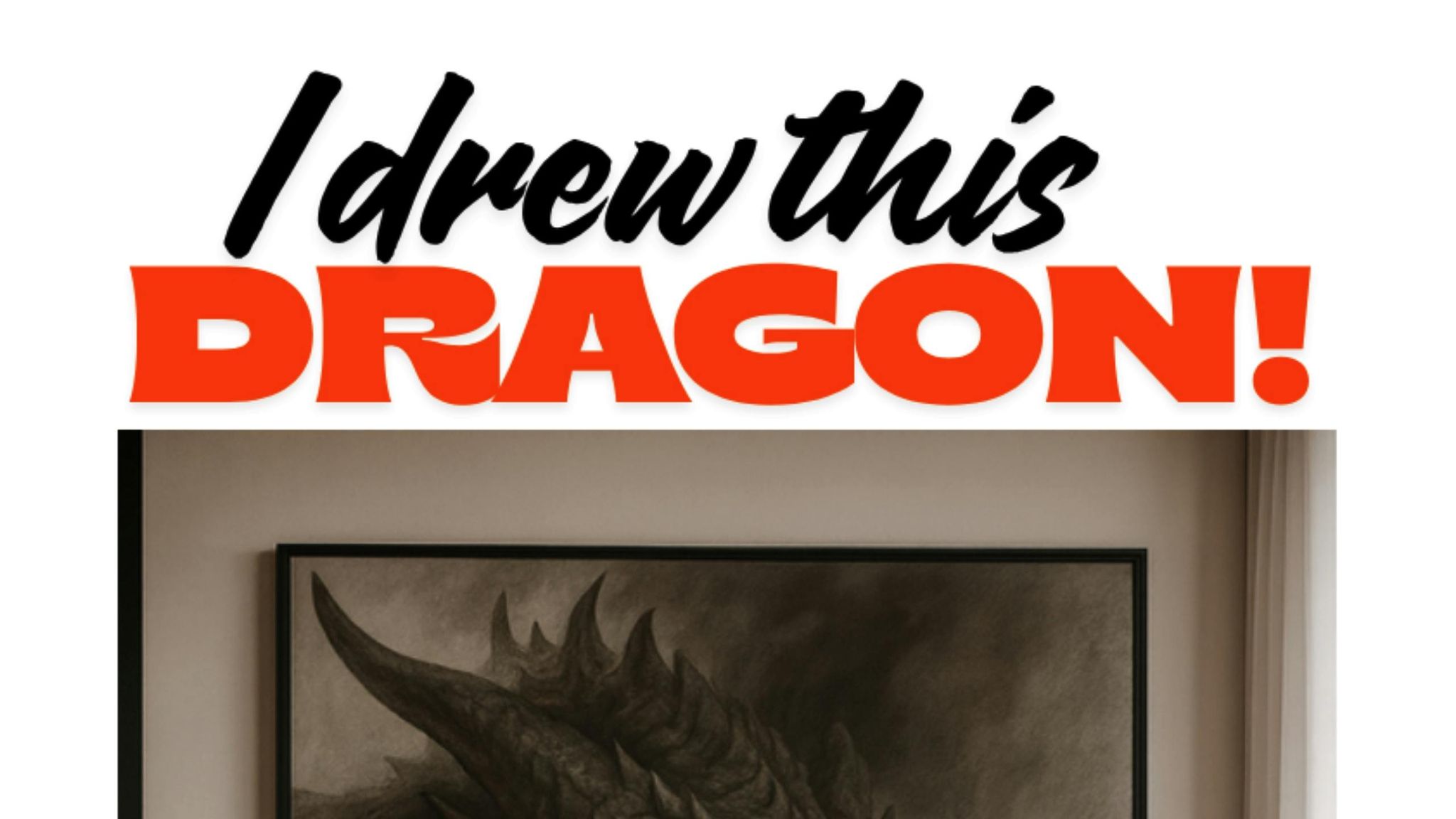
With your content pillars in place, digital tools can help you bring your ideas to life. For example, the app HowToDrawADragon is perfect for creating engaging, process-driven content. Its grid method breaks down complex drawings into manageable steps, which audiences love to see.
You can record your drawing process using the app – start by showing how you pick your reference image, then capture the setup of the grid. Each step of filling in the grid can become its own post, turning a single project into a multi-post series that keeps your followers coming back for more.
This grid method is also ideal for tutorials. For instance, one post could focus on analyzing proportions, another on shading, and a third on color application. By breaking down your process, you create valuable content that’s easy for your audience to follow.
Time-lapse videos are another great option. They showcase both your artistic talent and the app’s capabilities, making them perfect for Instagram Reels or TikTok. You could also create before-and-after comparisons by showing the original reference image alongside your completed grid drawing. These posts often generate strong engagement and highlight your growth as an artist.
Planning Monthly or Weekly Themes
Themed content is a great way to build excitement and keep your audience engaged. Monthly themes are ideal for larger projects, while weekly themes work well for shorter cycles. They help reinforce your brand and give your followers something to look forward to.
For example, you could run a "Dragon December" theme, featuring a new dragon illustration every week. Fill your schedule with process shots, tutorials, and finished pieces. Or try "Technique Tuesdays", where you dive into specific drawing methods, color theory, or tool reviews. "Workspace Wednesdays" could focus on studio setups, organization tips, or even showcasing other artists’ workspaces.
Holiday-themed artwork is another crowd-pleaser, as it ties into what your audience is already thinking about.
To avoid last-minute stress, plan your themes 2-3 months in advance. This gives you time to gather materials and references. Keep a running list of theme ideas so you’re never stuck for inspiration.
Consider creating series that span several weeks or months. For example, a "Mythical Creatures" series could spotlight a different legendary being each week, complete with sketches, process shots, tutorials, and final reveals. This kind of content builds anticipation and encourages your audience to stay tuned for the next installment.
Finally, track which themes resonate most with your audience. If dragon-related content consistently outperforms other topics, you might want to sprinkle more dragon themes throughout the year instead of limiting them to just one month.
Tools and Techniques to Stay Consistent
Staying active on social media without sacrificing your creativity might sound like a juggling act, but the right tools and methods can make it manageable. By using scheduling apps, content creation tools, and batching techniques, you can keep your online presence steady without being tied to your phone 24/7.
Using Scheduling Apps and Automation
Scheduling tools are a lifesaver for artists who want to post consistently without breaking their creative flow. Instead of pausing mid-project to update your feed, you can plan posts in advance and let automation handle the heavy lifting.
Meta Business Suite is a great place to start. It’s free, works for both Instagram and Facebook, and allows you to schedule posts ahead of time. Just upload your image, write a caption, pick a time, and you’re good to go.
If you’re looking for more advanced options, Later offers a visual calendar to map out your entire month. This is especially useful for artists who want their feed to have a cohesive look. Planoly is another solid choice, as it lets you preview how your Instagram grid will appear before anything goes live.
Plan posts during your low-energy times. Many artists find Sunday evenings ideal for scheduling the week ahead, leaving their peak creative hours free for making art. Whether you’re a morning person or a night owl, find a rhythm that suits your natural workflow. For example, schedule posts the night before if you’re most productive in the morning, or use a quiet moment in the morning to prep content for the day.
While scheduling apps handle the timing, content creation tools can simplify the creative side of things.
Using HowToDrawADragon for Content Creation
HowToDrawADragon is a handy tool for turning your drawing process into shareable content. Its grid method breaks an image – whether from the app’s library or one of your custom designs – into manageable steps, making it perfect for social media.
The grid method can fuel multiple posts. By breaking a single drawing session into smaller steps, you can create a series of updates, reducing the pressure to constantly produce new material.
The app’s AI-powered features help save time while keeping your work polished. Instead of spending hours planning your next piece, you can upload an image or choose a template, and the app guides you through the process. This streamlined approach not only supports your workflow but also makes it easier to stick to a regular posting schedule.
Time-lapse videos are another great option. Record your progress as you complete each section of the grid. These videos make for engaging posts on platforms like Instagram Reels and TikTok, showcasing your creative process and encouraging interaction.
You can also expand your content by educating your audience. For example, share how the grid method helps with proportions or adapt it for different drawing tools. This positions you not just as an artist but also as a resource for others.
In addition to tools, batching content is another strategy that can save time and keep your social media consistent.
Batch Creation and Time-Saving Techniques
Batching is a game-changer for anyone looking to post regularly without daily stress. Instead of creating content one piece at a time, dedicate blocks of time to produce multiple posts in one go. This approach not only boosts efficiency but also helps maintain a cohesive style.
For example, batch your photography. Set up your lighting and workspace once to capture finished pieces, work-in-progress shots, and close-ups all in one session. This saves time and ensures visual consistency.
Set aside one day a week for content creation. Many artists pick a specific day – like "Content Sunday" – to handle everything from taking photos and writing captions to designing graphics and recording short videos. Having a backlog of ready-to-post material can ease the pressure during busier times.
Use templates for recurring content. If you often share work-in-progress updates, create a standard format to streamline the process. This could include go-to angles for photos, pre-written caption structures, or a set of hashtags you regularly use.
Key Takeaways for Staying Consistent
Staying consistent on social media as an artist takes time and a thoughtful approach. Instead of trying to do everything at once, focus on strategies that fit your goals and lifestyle. Here’s how you can maintain a steady presence without feeling overwhelmed.
The Importance of Starting Small
Begin with a manageable routine – posting once or twice a week is a great way to ease into consistency without burning out. Jumping straight into daily posts can feel overwhelming, so it’s better to start small and build confidence in your workflow. Over time, as you grow more comfortable, you can gradually increase how often you post.
What’s more important than posting daily? Showing up consistently. Steady, reliable engagement builds trust with your audience and fosters growth. Focus on one or two platforms where your potential followers are most active, and dedicate your energy there.
Using Tools and Resources
The right tools can make social media feel less like a chore and more like a natural extension of your creative process. For example, tools like HowToDrawADragon allow you to break down your creative steps into shareable, bite-sized content. This could include close-up shots, time-lapse videos, or even behind-the-scenes insights into your techniques. This method not only provides variety but also stretches a single artwork into multiple posts.
To save time, try batching your content. Dedicate one day a week to creating and scheduling posts, which can help you avoid the stress of last-minute uploads. Repurposing existing work is another smart strategy – turn older pieces into fresh posts by presenting them in a new format or with updated captions. This way, you keep your feed active without constantly creating new material.
Staying Flexible and Making Adjustments
Adaptability is a crucial part of social media success. Regularly check your analytics to see when your audience is most active and what types of posts they engage with the most. If process videos consistently get more likes and comments than finished pieces, consider leaning into that format. Being responsive to comments and messages also strengthens your connection with followers. Features like polls and Q&A sessions can further encourage interaction and make your audience feel involved.
Don’t be afraid to experiment with new kinds of content while sticking to what works. Consistency is a long-term effort, so focus on gradual improvement rather than immediate results. Over time, this steady approach will help you build a meaningful and engaged community. Progress, not perfection, is the key.
FAQs
How can I stay consistent on social media without burning out?
To keep up with consistent posting without burning out, consider batching your content. Set aside dedicated time to handle everything in one go – planning, filming, and editing multiple posts. Once you’ve got them ready, use a content calendar or scheduling tool to spread them out over the week. This way, you’re staying active without constantly scrambling for new ideas.
Also, it’s worth remembering that quality beats quantity. Posting less often but delivering engaging, well-thought-out content can have just as much impact, if not more. And don’t forget to give yourself some breathing room. Taking breaks and prioritizing your mental health will help you stay motivated and keep those creative ideas flowing.
How can I repurpose my artwork to create more social media content?
Repurposing your artwork can help extend its impact while keeping your social media content fresh and engaging. A single piece of art can be transformed into multiple posts. For instance, you could share a time-lapse video of your creative process, zoom in on specific sections for detailed close-up shots, or put together a carousel that showcases the different stages of your work.
Older pieces don’t have to gather dust either. You can breathe new life into them by organizing themed collections, like a ‘Throwback Thursday’ post or a series featuring reimagined versions of your past work. Another idea is to turn your art into interactive content – create polls, host Q&A sessions, or design styled mockups that resonate with your audience. These approaches not only help you maintain a consistent posting schedule but also keep your followers eager to see what you’ll share next.
How can I find the right posting schedule and content strategy that fits my creative workflow and connects with my audience?
Finding the ideal posting schedule and content strategy is all about striking a balance between your creative flow and what your audience wants. Choose a posting frequency that feels manageable for you – whether that’s every day, once a week, or a few times a month. The key is consistency. And remember, it’s always better to focus on quality over quantity. Engaging content will always win over a flood of posts that feel rushed or uninspired.
Think about themes that click with your audience. Maybe it’s a behind-the-scenes peek at your creative process, step-by-step tutorials, or updates on your latest projects. You can also save time by repurposing your previous work into fresh content – it’s a great way to keep things diverse without starting from scratch. Tools like batch-creating and scheduling posts can help you stay organized and give you more time to focus on your art.
Above all, be yourself. Let your artistic voice shine through and connect with your audience in an honest, genuine way. People are drawn to authenticity, and they’ll value the creativity and sincerity you bring to the table.

